When you picturedinosaursyou in all likelihood imagine Brobdingnagian , direful animate being chilling above the earth – but not all dinos equip this neb , as one small , semi - subterranean species that has been freshly discovered proves .
Fona herzogae , as the raw species has been named , lived 99 million year ago in what is now Utah – and it drop at least part of its prison term burrowing underground .
unearth in the Mussentuchit Member of the Cedar Mountain Formation , Fonahad some funky features and was also incredibly well preserved , which tip palaeontologists off that something foreign was afoot .
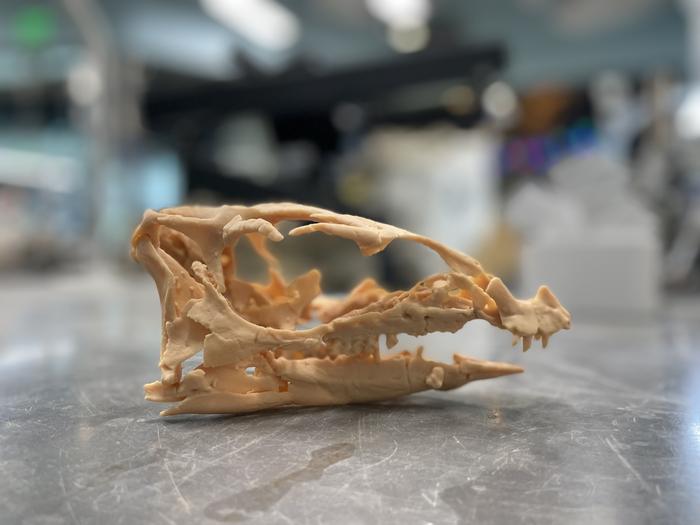
A 3D printedFonaskull.Image credit: Lindsay Zanno
“ Fonais often found complete , with many of its off-white preserved in the original demise pose , chest down with splayed forelimbs , and in exceptionally good condition , ” Haviv Avrahami , first author of a study describing the discovery , said in astatement . “ If it had already been underground in a burrow before death , it would have made this case of saving more likely . ”
In addition to its out of the blue good saving , Fonawas well - adapt to life below the aerofoil . It was small - bodied – roughly the size of a dog – with a round-eyed consistency plan and nofancy headgearor otheroutlandish appendage . or else , it had large bicep muscles , inviolable muscle attachment points on the coxa and legs , fused bones along the pelvis , and hindlimbs that were proportionally larger than the forelimbs – all of which are features apportion with animals known for digging orburrowing .
All in all , the researchers think this pointedness to the lil ’ dino being semi - fossorial – meaning it burrows part of the time .
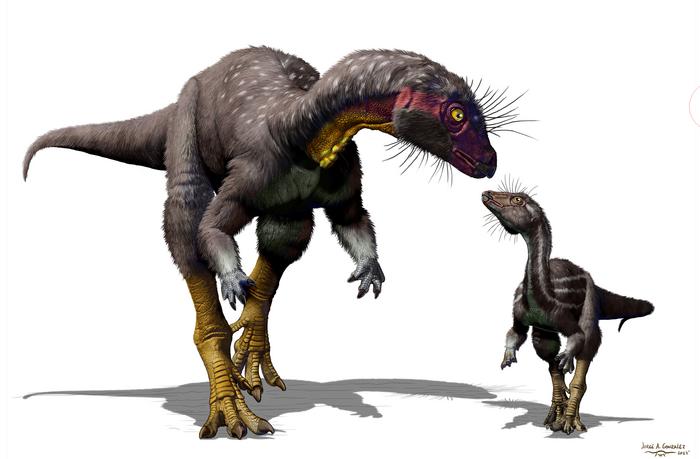
Fonawas probably covered in a downy coat of colorful feathers.Image credit: Jorge Gonzalez
“ Fonaskeletons are way more common in this surface area than we would predict for a pocket-size animal with frail bones , ” corresponding author Lindsay Zanno explained . “ The good explanation for why we find so many of them , and retrieve them in small bundle of multiple soul , is that they were survive at least part of the meter underground . fundamentally , Fonadid the hard work for us , by burying itself all over this area . ”
While the tunnels and chambers of thisdigging dinosaurare yet to be break , fossilist have previously discovered those of its closest congener , Oryctodromeus , in Idaho and Montana . FonaandOryctodromeushave a number of anatomical lineament in common , which further suggests they shared a semi - fossorial lifestyle
As for whatFonalooked like , Avrahami think it was “ most in all likelihood covered in a downy coat of colored feathers ” – sounds like a slay to us .
Alongside flourish our knowledge of subterranean dinosaurs and dino diversity in world-wide , the discovery sheds light on animation during the mid - Cretaceous – both above and below ground .
“ Fonagives us sixth sense into the third property an animal can occupy by moving underground , ” said Avrahami . “ It adds to the richness of the fossil record and expands the known multifariousness of modest - bodied herbivores , which remain badly infer despite being fantastically built-in components of Cretaceous ecosystems . ”
It also highlights just how narrow - tending we ’ve become in our view of dinosaurs – even though they ’re literally stillall around us .
“ People tend to have a myopic sentiment of dinosaurs that has n’t kept up with the scientific discipline , ” Zanno reason out . “ We now cognize that dinosaur diversity start the gamut from tiny arboreal sailplane and nocturnal Hunter , to sloth - like grazers , and yes , even subterranean shelterers . ”
The study is published inThe Anatomical Record .
